To launch an effective crypto trading bot in 2026, the optimal solution is using a KVM VPS with at least 2 vCPUs (with a frequency of 3.5 GHz or higher), 4 GB RAM, and an NVMe drive, located in a data center with network latency (ping) to the exchange of less than 2 ms — the cost of such configurations starts from $15–20 per month.
The algorithmic cryptocurrency trading market in 2026 requires infrastructure that is not just stable, but offers extremely low latency and high computing power. Using a home PC or cheap cloud solutions with "over-sold" resources leads to slippage, which can negate the profit of even the most successful strategy. When choosing hosting for crypto bot, it is necessary to consider not only the hardware but also the provider's network topology relative to the API endpoints of the major exchanges.
Technical requirements for hosting for crypto bot in 2026
The choice of server capacity directly depends on the type of your algorithm. While a simple Grid Bot can run on minimal resources, arbitrage systems or machine learning-based bots require a completely different approach to selecting the CPU and disk subsystem.
Processor and RAM
For most Python bots (e.g., Freqtrade or Hummingbot), single-threaded CPU performance is critical. We recommend choosing processors with high clock speeds, such as the latest generations of AMD Ryzen or Intel Core i9. In the context of virtualization, it is important that the provider uses KVM, as this guarantees resource allocation specifically to your instance. You can learn more about how much RAM a VPS needs for various tasks in our specialized guide, but for a trading bot, 4 GB is the "gold standard," allowing you to avoid using a swap file during sudden load spikes.
Disk Subsystem and Logging
Trading bots generate a huge amount of logs. In high-frequency trading conditions, writing data to a slow disk can cause delays in the execution of the main program loop. Using NVMe drives in 2026 is a mandatory requirement. This provides instant access to local databases (SQLite/PostgreSQL) where the bot stores order history and technical indicators. You should think about which disk to choose for a VPS in advance, based on the volume of historical data stored for backtesting.
Location and Ping: Why binance bot vps requires placement in specific data centers
Network latency is a trader's main enemy. Even a 50-millisecond difference can mean your order executes at a worse price or is rejected altogether due to price changes. When setting up a binance bot vps, the primary task is to minimize the packet path from the server to the exchange API.
Geographical Proximity to Exchanges
Most Binance servers (AWS) are concentrated in the Tokyo (ap-northeast-1), Ireland (eu-west-1), and Virginia (us-east-1) regions. If you trade on Binance, your VPS should be in these same locations or as close as possible. For the Bybit exchange, Singapore is critical. The right hosting location choice allows you to reduce ping to 1–5 ms, providing a massive advantage over competitors trading from "home" regions.
Network Channel Stability
In addition to ping, the Jitter characteristic (phase jitter) is important, as it shows the stability of the latency. If the ping jumps from 2 ms to 100 ms, the bot will encounter timeout errors. High-quality trading bot hosting implies direct peering with major backbone providers and a minimal number of intermediate nodes (hops) to the exchange infrastructure.
Looking for a reliable server for your projects?
VPS from $10/mo and dedicated servers from $9/mo with NVMe, DDoS protection, and 24/7 support.
View offers →# Example command to check latency to the Binance API
ping api.binance.com -c 10
# Example route check
traceroute api.binance.com
Choosing Virtualization and OS for crypto bot vps
The type of virtualization determines how isolated your bot will be from "neighbors" on the server. In 2026, the industry has finally moved away from OS-level container virtualization in favor of full hardware emulation. This is critical for ensuring stable response times (latency).
Advantages of KVM for Trading
KVM (Kernel-based Virtual Machine) technology allows the server to run with its own kernel and fully dedicated memory. Unlike OpenVZ, where resources are shared dynamically, KVM guarantees that if you rented 4 GB of RAM, they will always be available to your bot. A comparison of OpenVZ vs KVM vs LXC technologies shows that for real-time tasks like trading, only KVM is suitable.
Operating System Choice
For a crypto bot vps, Linux distributions (Debian 12 or Ubuntu 24.04 LTS) are most preferred. They consume minimal resources (from 500 MB RAM in "bare" form) and allow for fine-tuning the TCP/IP stack to speed up network packet processing. Windows Server should only be chosen if your trading software (e.g., some scalping terminals) does not have a Linux version.
Looking for a server that just works?
Valebyte VPS — NVMe, 24/7 support, deploy in 60 seconds.
Security and Anti-flood Protection in trading bot hosting
Trading server security is not just about protection from hacking, but also about preventing bans from the exchange. Exchanges have strict Rate Limits on the number of requests per second. If your bot exceeds them, your IP will be blacklisted.
API Key Protection and Isolation
Never store API keys in plain text in the bot's code. Use environment variables or specialized vaults (HashiCorp Vault). At the OS level, you must configure a Firewall (UFW or iptables), allowing incoming connections only from your trusted IP for server management.
# Basic UFW setup for a trading server
ufw default deny incoming
ufw default allow outgoing
ufw allow from YOUR_ADMIN_IP to any port 22 proto tcp
ufw enable
Combating Exchange Anti-flood Systems
When using trading bot hosting, it is important to correctly configure the logic for handling 429 errors (Too Many Requests). High-quality bots use an "exponential backoff" algorithm. It is also useful to have a dedicated IP address that is not "flagged" in spam databases, so that exchange anti-fraud systems (like Cloudflare, which protects APIs) do not throw a captcha at your bot.
Scaling: Moving from VPS to Dedicated Servers
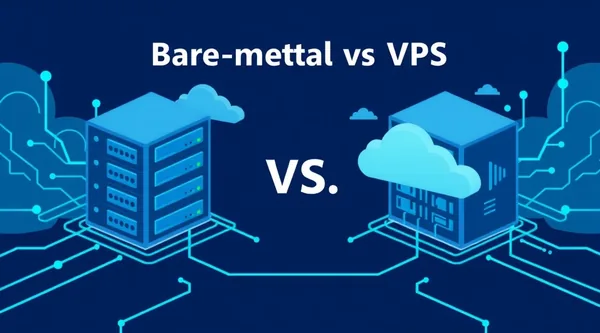
When the number of simultaneously running trading pairs exceeds 50–100, or when you start using complex neural network-based strategies, the resources of a regular VPS may become insufficient. At this point, the question of moving to Bare Metal arises.
When a VPS Becomes a Bottleneck
The main problem with even the most powerful VPS is "CPU Steal Time." This is the time your virtual processor waits for its turn on a physical core due to the activity of other clients. In trading, a 10 ms wait can cost hundreds of dollars. If your bot records frequent missed ticks, it's time to consider VPS up to $50/mo or already dedicated.
Advantages of Dedicated Servers for HFT
A dedicated server gives full control over the hardware. You can disable processor power-saving features (C-states) that introduce latency when a core "wakes up" and configure network card interrupts to specific CPU cores. For serious arbitrage, this is the only path to stable profit.
Comparative Table of Solutions for Running Trading Algorithms
Below is a table of recommended server configurations depending on the complexity and tasks of your crypto bot in 2026.
| Bot Type | Recommended Config | Location | Approximate Price |
|---|---|---|---|
| Simple Grid / DCA Bot | 1-2 vCPU, 2 GB RAM, 20 GB NVMe | Germany / Finland | $5 - $10 / mo |
| Intraday Bot (Freqtrade) | 2-4 vCPU, 4-8 GB RAM, 50 GB NVMe | Tokyo / Singapore | $15 - $30 / mo |
| Arbitrage / ML Bot | 8+ vCPU, 16 GB+ RAM, 100 GB NVMe | USA (Virginia) | $50 - $120 / mo |
| HFT (High-Frequency) | Dedicated Server (Ryzen 9 / EPYC) | Closest to the exchange | $150+ / mo |
Looking for a server that just works?
Valebyte VPS — NVMe, 24/7 support, deploy in 60 seconds.
Optimizing the Linux Network Stack for Trading
After renting a crypto bot vps, standard OS settings may not be optimal for processing thousands of small network packets. It is recommended to make changes to /etc/sysctl.conf to reduce latency.
# TCP optimization for low latency
net.core.rmem_max = 16777216
net.core.wmem_max = 16777216
net.ipv4.tcp_rmem = 4096 87380 16777216
net.ipv4.tcp_wmem = 4096 65536 16777216
net.ipv4.tcp_low_latency = 1
net.ipv4.tcp_timestamps = 0
net.ipv4.tcp_sack = 0
The tcp_low_latency = 1 parameter forces the Linux kernel to make packet routing decisions faster, minimizing buffering. Disabling tcp_timestamps and tcp_sack reduces CPU load when processing packet headers, which is critical when receiving a dense data stream via WebSockets.
Monitoring and Fault Tolerance
A bot that "hangs" with an open position is a direct loss. Your hosting for crypto bot should be accompanied by an external monitoring system. Do not rely solely on the bot's internal logs.
- Uptime Robot / StatusCake: Check your server's availability every 60 seconds.
- Telegram Alerts: Set up notifications for API errors (4XX, 5XX codes) and critical RAM usage levels.
- Systemd: Use a process manager to automatically restart the bot if it crashes.
Example of a simple systemd unit file:
[Unit]
Description=Crypto Trading Bot
After=network.target

[Service]
Type=simple
User=botuser
WorkingDirectory=/home/botuser/bot
ExecStart=/usr/bin/python3 main.py
Restart=always
RestartSec=5

[Install]
WantedBy=multi-user.target
This configuration ensures that the bot will start automatically after a server reboot or an accidental code crash. In 2026, infrastructure maintenance automation is a mandatory skill for any algo-trader.
Conclusions
For a successful crypto bot launch, choose a KVM VPS with NVMe disks in a location as close as possible to the exchange API (Tokyo for Binance, Singapore for Bybit). The optimal starting config is 2 vCPUs and 4 GB RAM, and as volume and strategy complexity grow, plan a transition to dedicated servers with high CPU clock speeds.
Ready to choose a server?
VPS and dedicated servers in 72+ countries with instant activation and full root access.
Start now →